Why the Second Tap Dance Class Feels Harder (And Why That's a Good Sign)
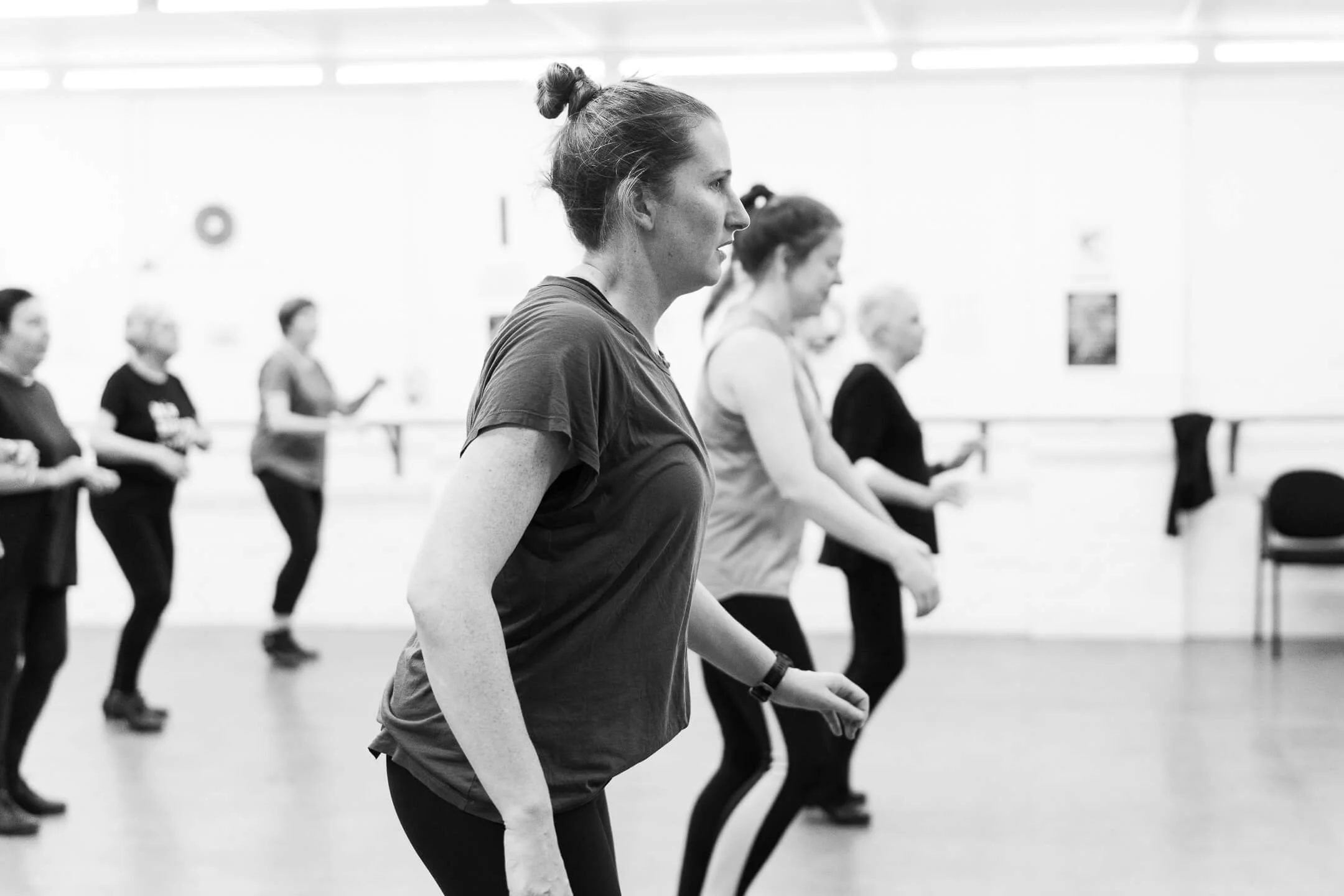
If you're new to tap dance, here's something nobody warns you about: the second class is often harder than the first.
You got through the first class. You walked in not knowing quite what to expect, and somewhere in the middle of it, something clicked, not perfectly, not completely, but enough. You left thinking you might actually be able to do this.
And then you came back for the second class.
And it was harder.
The steps didn’t feel as easy. Your feet didn't cooperate the way they had the week before. And somewhere in the back of your head, a question formed: have I gone backwards?
You haven't. But understanding what's actually happening helps.
Table of Contents
What Changes Between The First Class And The Second
The first class has a big advantage, you don't know what you don't know yet.
Everything is new. Expectations are low, your own and everyone else's. You're getting through it, and getting through it is enough.
By the second class, your brain has caught up. Now it's taking inventory. It notices what you can't quite remember, what you can't quite do, and where you feel a bit out of sync. This stage in the learning process is known as conscious incompetence, the point where you've learned enough to know exactly how much you don’t know yet.
It's uncomfortable. It's also completely necessary.
Why Adults Feel This Differently
Children move through early learning stages quickly, partly because they're not paying close attention to how they're doing. Adults are different. Adults analyse. Adults compare. Adults notice every mistake in real time and file it away as evidence.
In tap dance specifically, you're not just learning to move your body in a new way. You're learning to make rhythmic decisions at the same time, to hear the beat, feel where it sits, and respond to it with your feet. That's a genuine cognitive load. Your brain is doing more work than it looks like from the outside.
What most people don't realise is that between classes, the brain keeps working. The material you covered in class is being processed, organised and consolidated, even when it feels like you've forgotten all of it. What feels like going backwards is often the brain doing its most important work. If you want to understand more about what tap dance actually demands of the brain, Adult Tap Dance: Why Your Brain and Feet Disagree goes into it in more detail.
What Actually Helps In The Early Weeks
The second and third class is where a lot of adult beginners become unstuck and then by about week 5 or 6 it all starts to come together. The most useful thing you can do in the first few classes is narrow your focus. Not the whole combination, just one step at a time. Progress in tap dance doesn't come from trying to do everything at once. It comes from getting one thing right, then building on it and then focusing on the next thing.
And trust the gap between classes. You don't need to practise at home in the early weeks. Showing up consistently is enough. What feels impossible in week two often feels different in week three, not because you've suddenly become a different person, but because your brain has had time to catch up. This is part of what makes tap dance different from other movement, something worth reading about in Tap Dance: The Movement Is the Music.
What "Getting It" Actually Means
Getting it doesn't mean executing a combination perfectly. It doesn't mean keeping up with everyone else, or never losing count, or looking like you've been doing this for years.
In the early weeks, getting it means you showed up. You tried the thing. You tried again, and probably tried again, and then it finally clicks, and you’ve got it.
The rest follows from that, gradually, unevenly, and usually when you're not expecting it.
Frequently Asked Questions
-
Most beginners start to feel comfortable in a tap class somewhere between four and eight weeks. Not performance-ready, but no longer starting from scratch every time. Getting to a solid intermediate level typically takes two to three years of consistent weekly classes. The honest answer is that it depends more on how regularly you show up than on any natural ability. Consistency matters more than talent at every stage.
-
For most people, somewhere around the four to six week mark things start to feel less completely unfamiliar. Not easy, but less like starting from scratch every time. Consistency is what gets you there. Turning up regularly matters more than how naturally it comes.
-
Not having rhythm is not a barrier to learning tap dance for beginners, rhythm is a skill you build through the process, not something you need to arrive with. Tap dance is one of the better styles for developing rhythm because you can hear exactly what you're doing as you learn. The feedback is immediate and that makes the correction faster.
-
No. Adults bring things to the learning process that children don't, focus, motivation, the ability to understand why something works the way it does. It might take a little longer for movement to feel automatic. That's not the same as too late.
-
Not in the early weeks. Showing up to class is the most important thing. If you want to practise between sessions that’s a bonus, but really you just need to come to classes consistently. That's enough.
The Second Class Is Not The Measure
If the second class felt harder than the first, that's not a sign that tap dance isn't for you. It's a sign that your brain has engaged with the material seriously enough to know what it's working with.
Stay with it past the hard part. There's a moment further in where something shifts, not all at once, usually step by step, but enough that you notice it. Enough that you come back the following week because you want to see what comes next.
If you’re ready and you’re based in Melbourne, The Melbourne Tap Studio offers tap classes for every skill level, from Absolute Beginners through to Advanced.