Tap Dance: Where The Movement Is The Music
Most dance forms share a common relationship with music. The music plays, the dancer responds. The choreography is built around the soundtrack, the body interpreting what the instruments are doing.
Tap dance is different.
In tap, the dancer doesn't just move to the music. The dancer is the music. The feet are the instrument, the floor is the stage, and every step produces a sound that is as deliberate and as musical as anything a drummer or pianist puts into a performance.
That single distinction, the movement is the music, is what separates tap from most other dance forms, and why it carries the cultural and artistic weight it does.
Table of Contents
The Body As The Instrument
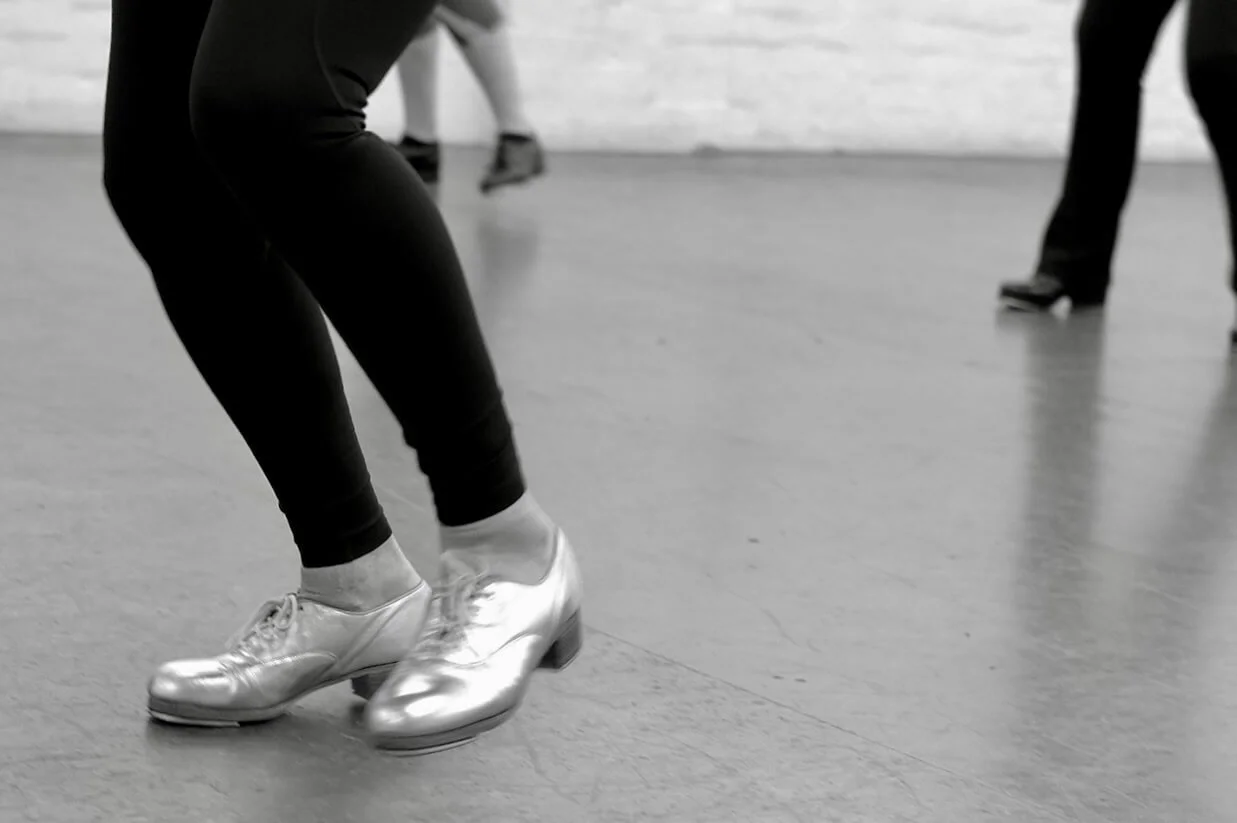
It starts with the shoe.
A tap shoe has a metal plate fixed to the toe and another to the heel. When those plates connect with the floor, they produce a sound. Not an incidental sound, not a side effect of movement, a sound that is the whole point.
The tap plate itself is an instrument. Different surfaces produce different tones. Different weights, different angles, different parts of the foot produce different sounds.
But the shoe is only the beginning.
Tap dance’s percussive identity lives in the whole body, in clapping, snapping, body patting. The full physical inheritance of a tradition that learned to make music from everything it had.
A tap dancer learning to control all of those variables is doing exactly what a drummer does when learning to control dynamics, tone and timing. The body becomes the thing that makes the music, because it literally does.
This is why tap class feels different from other dance classes, from the very first lesson. You are not only learning to move in a particular way. You are also learning to play music.
Rhythm Before The Shoe
The relationship between tap dance and music is not accidental. It goes back to the origins of the art form itself.
Tap dance grew from two traditions meeting in the same place at the same time. African American percussive dance, rhythm carried in and on the body when drums were prohibited, and Irish percussive footwork converged in nineteenth century New York. Two communities, each with deep traditions of making music through movement, found each other and built something neither had on its own.
What emerged was a form of dance rooted not in shape or line or expression, but in rhythm and sound. The body as instrument is the mechanism.
By the early twentieth century tap dance had found its natural musical partner in jazz. The relationship that formed between tap dancers and jazz musicians was conversational. Tap dancers were considered musicians. They shared stages with bands not as performers dancing alongside the music but as participants in it, call and response, improvisation meeting improvisation, feet answering horns, keys, strings and drums.
At the Hoofers Club in Harlem there was a rule: thou shalt not copy another dancer's steps exactly. Not a prohibition on learning from each other, but a demand for originality. Bring your own voice, a jazz musician's ethic, applied to the feet.
What This Means When You’re Learning
If your feet are an instrument, then learning tap dance is closer to learning drums than it is to learning other dance styles.
In ballet and jazz you are learning movement, technique and shapes, positions of the body, line, form. In tap dance you are learning to hear. To count. To feel where the beat is and make a decision about what to do with it. A shuffle is not just a movement pattern. It's a rhythmic choice. A cramp roll is not just a sequence of foot strikes. It's a phrase of music your body is playing.
This is why tap dance can take longer to feel comfortable, longer than many people expect. You are doing two things simultaneously, moving your body and making musical decisions, and the brain has to learn to manage both at once. That's genuinely hard. It's also why it gives back more than most physical activities do. The cognitive load is real, and so is the satisfaction when things start to land.
It's also why the room sounds different as students progress. In the early weeks a class sounds like people learning steps. A few months in it starts to sound like something else. Like people making music together.
A Living Tradition
Tap dance has always been passed on orally. Person to person, body to body, generation to generation. Unlike many other art forms there is no definitive single authoritative text. The knowledge lives in dancers and is transmitted through teaching and watching and doing.
That oral tradition connects every tap dancer today to the lineage of the art form.
The timestep you learn in a beginner class was created by ‘King’ Rastus Brown, shaped by Bill Robinson, and refined by John Bubbles. Passed on by generations of teachers before it reached the dance studio you're standing in. You are not just learning a step. You are becoming a link in a chain that goes back further than most people realise.
That's what makes tap feel different, from the first class. You're not just learning something new. You're stepping into something with a long and rich history.
Frequently Asked Questions
-
In the strictest sense, tap dance is classified as a form of percussion. The metal plates on the shoe strike a hard surface to produce sound, which is exactly what a percussionist does. Many tap dancers, particularly those working in the rhythm tap tradition, consider themselves musicians first and dancers second. Whether or not tap qualifies as an instrument in a formal sense, the intent is the same: to make music with the body.
-
No. Most adult beginners come to tap with no formal music training at all, and that's fine. What tap teaches you, how to count, how to feel where the beat sits, how to make rhythmic decisions, develops through the learning process itself. You don't arrive with it. You build it.
-
Because they don't need it. When the movement is the music, a backing track is optional rather than essential. A’cappella tap, tap performed without music, is one of the most demanding and respected forms of the art. It strips everything back to what tap actually is: sounds made by a body on a floor. Nothing added.
-
Tap dance and jazz grew up together in early twentieth century America and each shaped the other. Tap dancers performed alongside jazz musicians not as support acts but as equal participants, the feet improvising in conversation with the horns and the piano. Jazz gave tap its musical language: swing, syncopation, call and response, improvisation. Tap gave jazz a visual form. The two art forms are so intertwined that understanding one makes you a better student of the other.
-
Most dance styles are built around movement, the body responding to music that exists independently of the dancer. Tap dance inverts that relationship. The dancer produces the sound. The movement and the music are the same thing, not two separate elements working together. That single distinction changes everything about how tap is learned, taught, and experienced, and why it feels unlike any other class from the very first lesson.
The Movement Is The Music
Tap dance is often performed with music, however, it can be performed with no accompaniment at all. No band, no backing track, no music playing in the room. Just shoes on a floor.
And in that silence, there is the music. Because the movement is the music.
That's what you're learning to do when you learn to tap. Not just steps. Not just a routine. Your body is the instrument and you're making music with your feet.
If you’re ready to make music with your feet and you’re based in Melbourne, The Melbourne Tap Studio offers classes for every skill level, from Absolute Beginners through to Advanced.