Dance fitness studios are launching new formats. More people are moving their bodies and that’s genuinely a good thing.
But if you’re an adult thinking about booking a dance class for the first time, or coming back to dance after a break, there’s something worth understanding before you do.
Dance fitness and learning to dance are not the same thing. They both share a playlist and a studio floor, and that’s where the similarity ends. Knowing the difference helps you choose the right one for what you’re looking for.
Table of Contents
What dance fitness is
Dance fitness classes are designed around movement as exercise. You show up, an instructor leads you through an hour of choreographed movement to music, you sweat, you leave.
The goal is physical; cardio, co-ordination, an elevated heart rate. The format is designed to be drop-in friendly, you don’t need experience, and there’s no expectation that you’ll build on anything from the week before. You follow, you move, you’re done.
There is nothing wrong with this. For someone who wants an active hour that doesn’t feel like the gym, dance fitness delivers exactly what it promises. The music makes it more enjoyable than a treadmill. The group format makes it more motivating than exercising alone. If what you want is to move your body in a way that feels good for an hour, this is a good way to do it.
What dance classes for adults actually teach you
Learning to dance is a different proposition entirely.
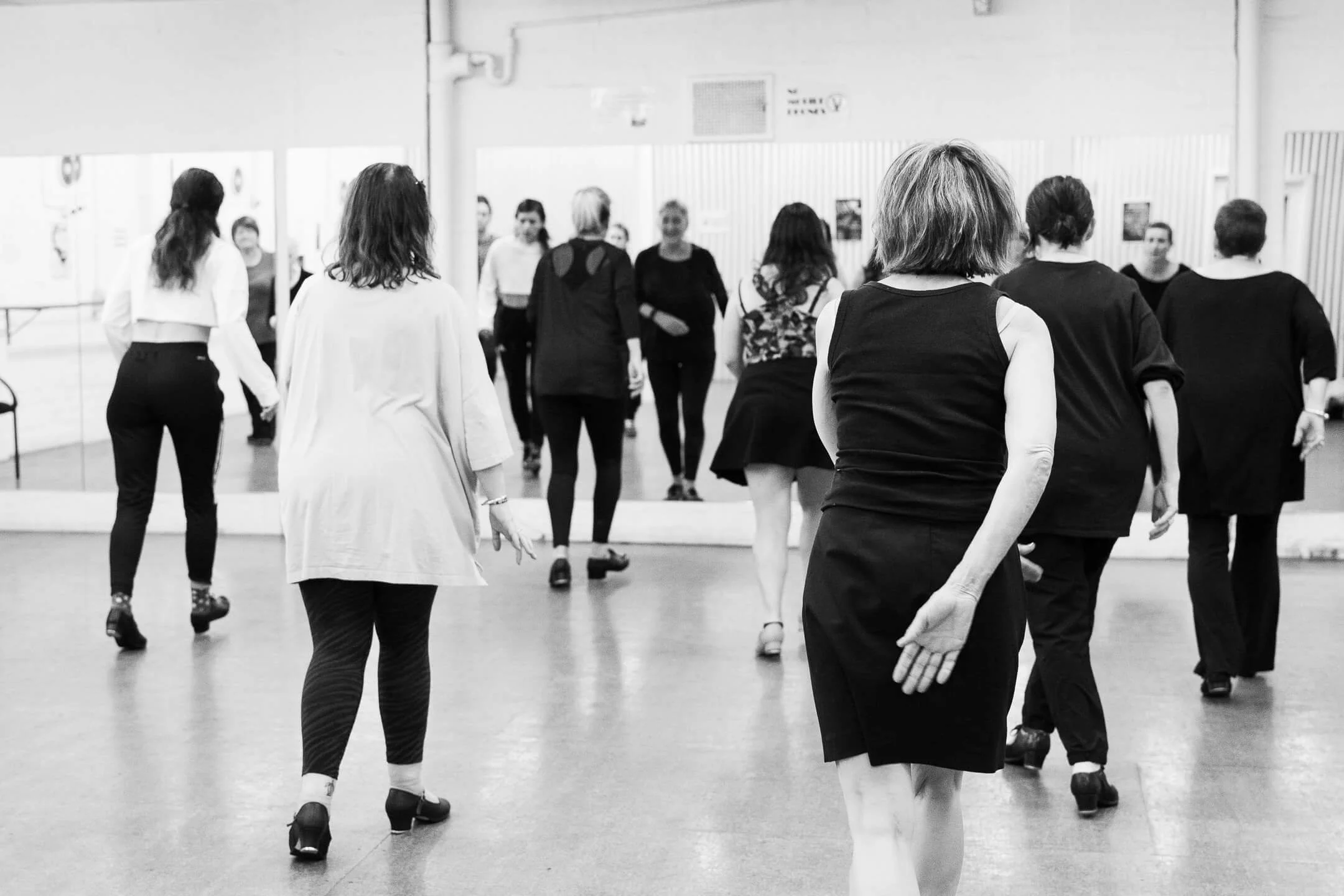
If you’ve never learnt to dance before, then a beginner level class is the place to start. These classes are designed specifically for people with no previous experience and you’ll start off learning all the basics and build on them week by week.
A dance class for adults is usually built around skill and technique, you are not just being led through for an hour. You are learning and building something. The steps have names. What you learn in week one connects to what you learn in week four, which connects to what you’re doing six months later. The progress is real and it compounds, slowly at first, then in ways that surprise you.
In tap dance specifically, you are learning to make music with your feet. Every step has a rhythmic value. Every combination is a musical decision. The learning asks something of you that goes beyond following, it asks you to understand what you’re doing and why, so that eventually you can do it without being shown.
And while the focus in a dance class for adults is on learning, the physical benefits follow naturally. A class will improve your cardiovascular fitness, your co-ordination, your balance, and your memory. You’ll work up a sweat. You’ll also leave with something a fitness class can’t give you, a new skill that you worked for.
The thing nobody mentions before you book
Both formats involve moving with other people. But the social experience is different in ways that are hard to predict until you’ve been in both rooms.
In a dance fitness class, you are exercising alongside people. The energy is collective but the experience is largely individual. You’re in your own body, following your own version of the choreography, working toward your own fitness goals.
In a class where people are genuinely learning together — working toward the same steps, learning the same routines, struggling with the same transitions, staying with the same material week after week — something else develops. Not because it’s been designed in, but because it’s the natural result of a room full of adults working toward a real standard together. When someone finally nails the thing they’ve been trying to get for three weeks, the whole room knows it. That moment means something because the work behind it was real.
That’s not better or worse than what happens in a dance fitness class. It’s just different. And it’s the kind of thing that keeps people coming back for years rather than sessions.
How to know which one is right for you
The honest answer is that it depends on what you’re actually looking for, and it’s definitely worth thinking about before you book in.
If you want an active hour with music, no pressure to remember anything from last week, and no particular interest in building a skill, dance fitness is probably the right choice. It will deliver on that fitness goal efficiently and enjoyably.
If you want to actually learn to dance, to build something week by week, to leave each class knowing something you didn’t know when you walked in, to develop a skill that belongs to you and goes where you go — that’s a different kind of class. It will ask more of you. It will also give back more.
Some people do both types of class, which makes complete sense because they’re not competing.
What’s worth knowing before you choose
The dance landscape for adults in Melbourne right now offers more options than it ever has. And that’s a good thing. But “dance class” covers a wide range of experiences, and the marketing language around most of them — welcoming, fun, no experience needed — doesn’t always help you understand what you’re actually walking into.
The most useful question to ask before you book anything is a simple one: do I want to be led through something, or do I want to learn something? The answer to that question will tell you more about which class is right for you.
Frequently asked questions about dance fitness and adult dance classes
-
Dance fitness is exercise set to music — the goal is physical, the format is drop-in, and you don’t need to remember anything from last week. Adult dance classes are built around learning a skill. The steps have names, the progress compounds week by week, and what you leave with is something you’ve actually built. Both are valid. They just give you different things.
-
Yes. A dance class that teaches real technique will improve your cardiovascular fitness, coordination, balance and memory. You’ll work up a sweat. The difference is that the fitness is a by-product of learning, not the primary goal — which means you also leave with a skill that develops and grows over time.
-
Neither requires prior experience. Dance fitness classes are designed to be accessible from day one with no expectation that you’ll remember anything between sessions. Adult dance classes also welcome complete beginners, but they do build progressively — what you learn in week one connects to what comes next. Starting from scratch is fine. Just know that one format asks you to follow, and the other asks you to learn.
-
The most useful question to ask yourself is this: do I want to be led through something, or do I want to learn something? If you want an active hour with music and no pressure to retain anything, dance fitness is probably your answer. If you want to build a real skill, make genuine progress, and leave each class knowing something you didn’t know before, a technique-based dance class is the better fit.
Ready to give an adult dance class a go?
Book a class now and start tap dancing your way to fitness.
If you’re in Melbourne (Australia) explore our dance classes for beginners to find a tap class that suits you, or if you’re returning to dance classes you can see all or our other class levels here.