Returning to Dance as an Adult: Start Where You Are
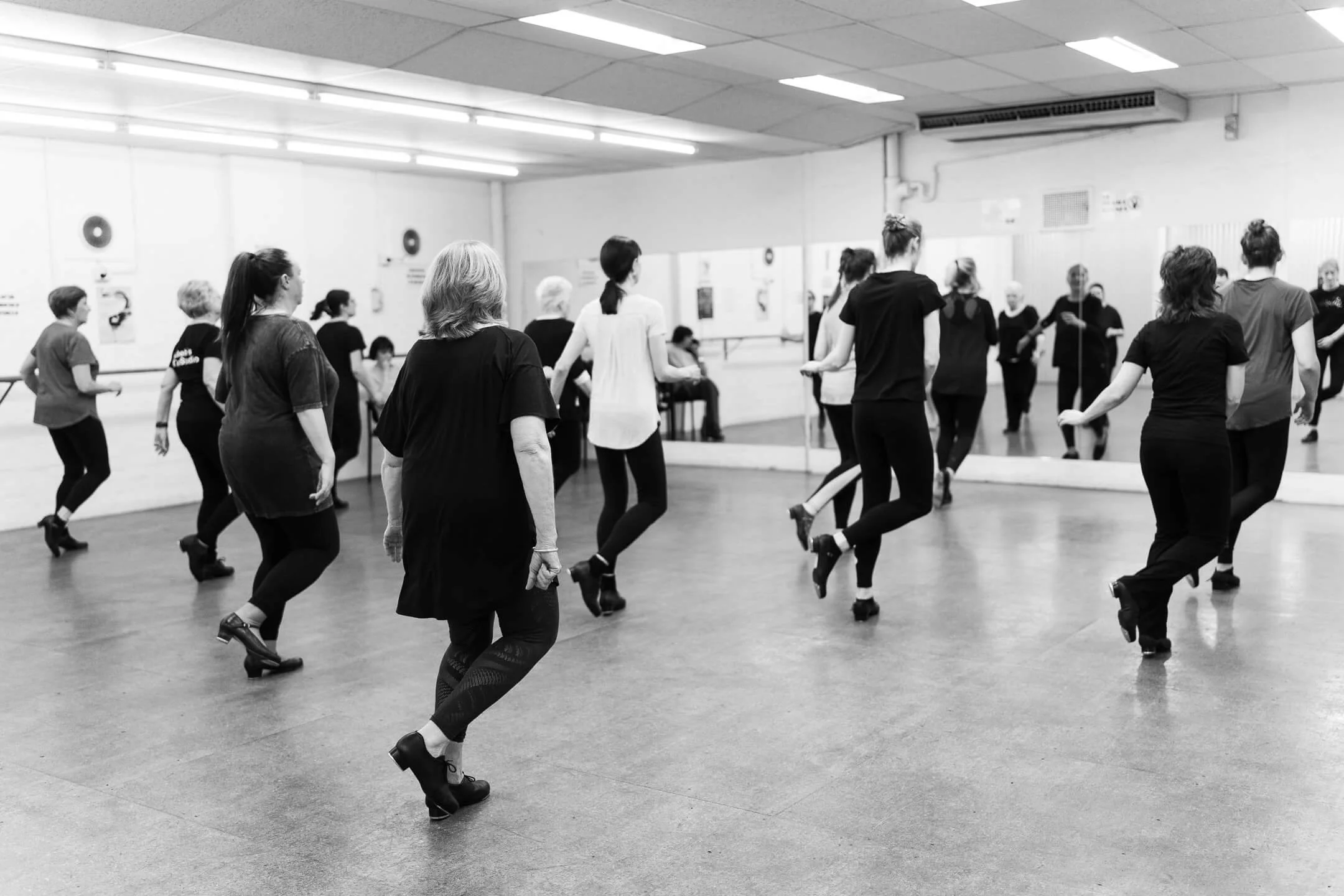
If you’ve been thinking about returning to dance as an adult, you’re definitely not alone, and you’re not behind.
So many adults carry a quiet, persistent thought, “I used to dance, and I’d like to dance again.”
It might come with nostalgia, longing, or even a little grief for a part of yourself that feels far away now. And often, that thought is quickly followed by doubt.
Am I too old?
Will I be the worst one in the room?
Has my body changed too much?
Is it too late to start again?
The truth is, returning to dance as an adult isn’t about going backwards or picking up where you left off. It’s about arriving, as you are now, with all the life experience, resilience, and self-awareness you didn’t have the first time around.
This is your permission to begin again, without pressure.
Table of Contents
You’re Not the Only One Thinking About Coming Back
One of the biggest myths about dance is that it belongs to the young, or to people who never stopped.
But the reality is very different.
Many adults return to dance after years (sometimes decades) away. Careers, families, injuries, confidence knocks, or simply life getting busy can all pull us away from movement, even when it mattered deeply once.
Returning doesn’t mean you failed by leaving.
It means you’re listening now.
That urge to move again isn’t random. It’s new information.
What Returning to Dance as an Adult Really Feels Like
Let’s be honest, returning to dance isn’t all grace and confidence on day one.
For most adults, it feels like:
Excitement mixed with nerves
Familiarity mixed with awkwardness
Joy mixed with vulnerability
And that’s completely normal.
Your body remembers more than you think, but not always in the way you expect. Some things come back quickly. Others take time. And some things feel entirely new because you are different now.
Returning to dance as an adult often feels less about performance and more about presence.
You’re not chasing approval.
You’re not trying to be the best.
You’re simply learning how to enjoy moving again.
You’re Not Starting From Scratch, You’re Starting From Experience
One of the biggest mindset shifts for returning dancers is understanding this:
You are not a beginner in the same way you once were.
Even if your body feels unfamiliar or your technique feels rusty, you bring:
body awareness
musical understanding
discipline
curiosity
emotional intelligence
You also bring patience, or at least, the ability to learn it.
Returning to dance as an adult means you’re learning with context. You understand effort. You understand progress. You understand that growth doesn’t happen overnight, and that makes the journey far more sustainable.
Confidence Doesn’t Come First, Safety Does
Many adults wait to feel confident before returning to dance.
But confidence doesn’t come before you start.
It comes because you start, in the right environment.
A supportive, inclusive space changes everything.
When you feel safe:
you stop comparing
you take risks
you laugh at mistakes
you keep coming back
Confidence grows quietly, through repetition and encouragement, not pressure.
If returning to dance feels intimidating, it’s not because you can’t do it. It’s because you haven’t yet found a space that meets you where you are.
It’s Okay If Your Body Has Changed
This one matters.
Bodies change. That’s not failure, that’s life.
Returning to dance as an adult often means moving in a body that has:
lived more
worked harder
carried stress
adapted and survived
Dance doesn’t require you to shrink yourself back into who you were. It invites you to learn what movement looks like now.
Strength, coordination, balance, and stamina all rebuild with time, especially when movement feels enjoyable rather than punishing.
Your body is not a problem to fix.
It’s a partner to reconnect with.
Returning Is Not About Proving Anything
This might be the most important part.
Returning to dance as an adult is not about:
catching up
being impressive
reclaiming a title
proving you “still have it”
It’s about joy, expression, challenge, and connection.
You don’t owe anyone a performance.
You don’t owe your younger self perfection.
You owe yourself the chance to move in a way that feels good.
How to Start Returning to Dance (Without Overthinking It)
If you’re considering returning, here are a few thoughts:
Look for spaces that prioritise adults, inclusivity, and encouragement, not intensity or ego.
Let it be messy at first
Awkwardness is part of the process. It passes faster than you think.Start with curiosity, not commitment
You don’t have to decide if this is “your thing forever.” Just try the next class.Move consistently, not perfectly
Progress comes from showing up, not from getting it right.Allow yourself to enjoy it
Joy is not a reward, it’s the reason.
Returning to Dance Is a Homecoming, Not a Comeback
A comeback implies you left something unfinished.
Returning to dance as an adult is different. It’s a homecoming.
You’re not trying to be who you were.
You’re learning who you are now, in motion.
And that is powerful.
Frequently asked questions about returning to dance as an adult
-
No. There is no age limit on learning, moving, or enjoying dance. Adults return in their 30s, 40s, 50s and beyond, successfully and joyfully.
-
Confidence builds gradually. Most adults start feeling more comfortable within a few weeks, especially in a supportive environment.
-
That’s okay. Memory returns through repetition. And even if it doesn’t, learning something new can be just as rewarding.
-
No. Dance helps you build fitness, you don’t need to arrive with it.
Final Thought
If returning to dance as an adult has been quietly sitting in the back of your mind, consider this your permission.
You’re not late.
You’re not behind.
You’re right on time.
And you don’t have to be ready, you just have to begin.
If you’re in Melbourne (Australia) explore our beginners classes to find a tap class that suits you, or if you’re after something more challenging, explore our other tap classes.