Movement that makes you think: Why adult dance classes offer more than repetitive exercise
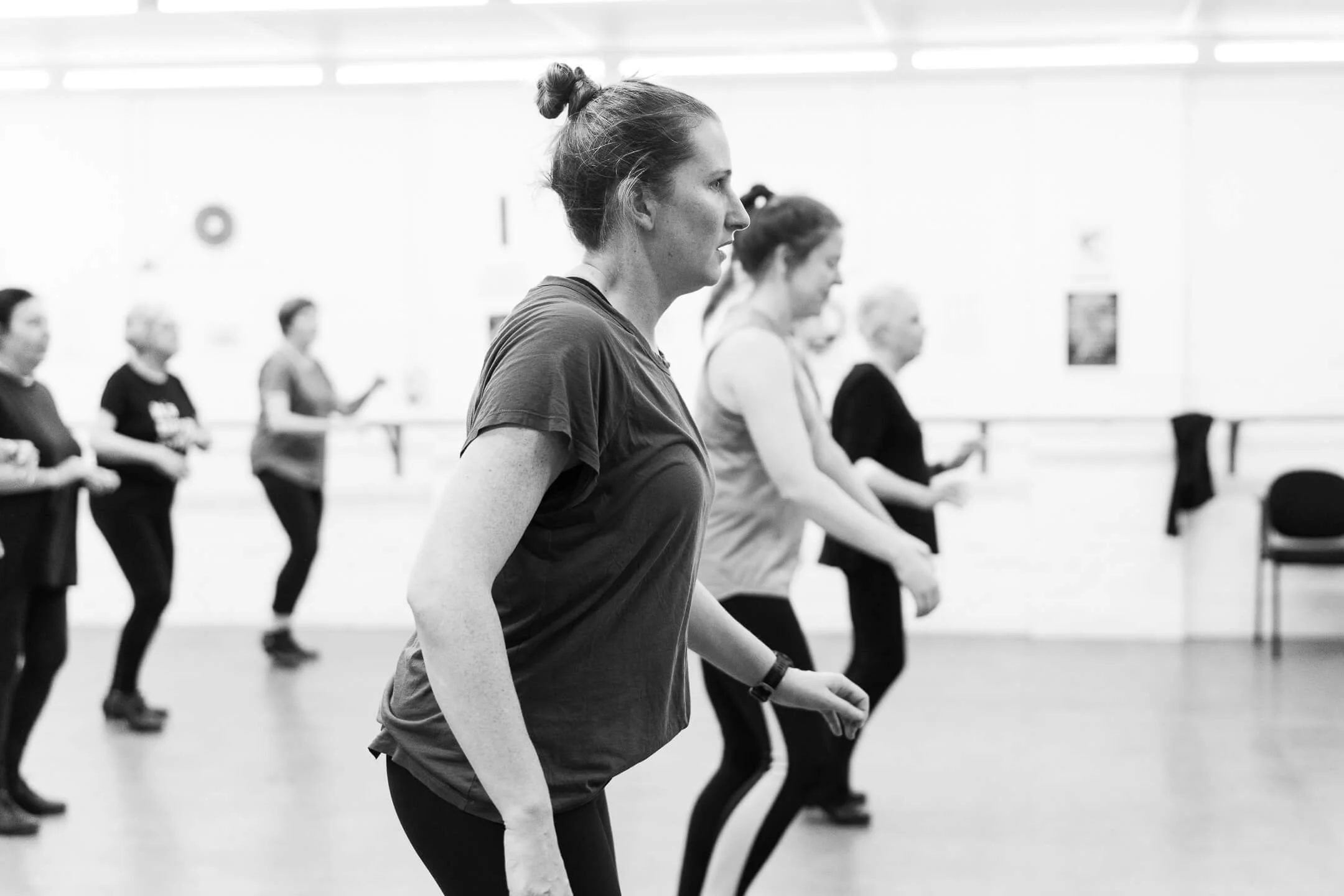
If you’ve ever left a workout feeling physically tired but mentally untouched, you’re not alone. Many adults move their bodies regularly, yet still crave something more engaging, something that wakes the brain up as much as the muscles.
This is where adult dance classes offer something different.
Unlike repetitive exercise, dance asks you to think, listen, adapt, remember, and respond, all at once. It’s movement that keeps you present. Movement that challenges the brain. And for many adults, it’s the missing piece in how they want to feel after they exercise.
In recent years, research has begun to back up what dancers and teachers have long known: movement that engages both the body and the mind offers benefits that go beyond fitness alone.
Table of Contents
Repetitive exercise vs movement that engages the brain
Repetitive exercise has its place. Walking, cycling, swimming, and strength training all support cardiovascular health, strength, and endurance. They are accessible, effective, and familiar.
But many of these activities rely on repetition. Once the movement pattern is learned, the body can largely operate on autopilot. You can scroll your phone, plan dinner, or mentally tick off tomorrow’s to-do list while your legs keep moving.
That’s not a bad thing, but it is limited.
Some forms of movement demand more. They require attention, memory, timing, and decision-making. They ask you to stay present rather than zone out. Dance sits firmly in this category.
Why adult dance classes are different
Dance is not just physical effort. It’s a conversation between the brain and the body.
In an adult dance class, you are:
learning and recalling sequences
responding to rhythm and music
adjusting timing and coordination
correcting mistakes in real time
navigating space and other people
staying mentally alert while moving
This combination is what researchers call cognitive-motor engagement, physical activity paired with active mental processing.
And it matters.
Once you have these basics, you can start linking them together into short, rhythmic sequences. Over time, you’ll develop stronger control, speed, and musicality.
What the research tells us about dance and brain health
One of the most widely cited studies on dance and cognitive health was published in the New England Journal of Medicine in 2003. Researchers followed older adults over many years to examine which leisure activities were associated with a reduced risk of dementia.
Their findings were striking.
Among all physical activities studied, dance was associated with the greatest reduction in dementia risk. Participants who danced frequently showed a 76% lower risk of dementia compared to those who rarely danced.
Why dance?
Because it wasn’t just exercise.
The study suggested that the mental demands of dance, remembering steps, responding to music, coordinating movement, were key contributors to its protective effect.
More recent research has continued to support this idea. Studies have found that dance can improve:
memory and executive function
balance and coordination
reaction time
mood and emotional wellbeing
A 2020 meta-analysis of randomised controlled trials found that dance-based activities were associated with improvements in balance, cognitive function, and physical strength in older adults.
And importantly, these benefits were seen not because dance is “harder,” but because it is richer.
Why adults need more than repetitive exercise
Adult life is mentally demanding.
Many adults spend their days:
managing work responsibilities
making constant decisions
juggling family, schedules, and obligations
spending long periods in their heads
When exercise becomes another task to complete, another box to tick, it can start to feel hollow, even if it’s physically effective.
Movement that engages the brain offers something different:
it interrupts overthinking
it pulls attention into the present moment
it creates mental clarity rather than mental noise
This is why many people leave dance class feeling not just tired, but lighter.
Adult dance classes and mental engagement
Unlike workouts designed around efficiency and output, adult dance classes prioritise participation, awareness, and responsiveness.
You don’t just move — you listen.
You don’t just repeat — you adjust.
You don’t just finish — you stay curious.
In styles like tap dance, the cognitive engagement increases further. Rhythm, timing, and sound require constant feedback between the brain and the body. You are effectively making music while moving, which adds another layer of attention and coordination.
This is one of the reasons adult tap dancers often report improvements in focus and confidence that extend beyond the studio.
But isn’t dance harder to learn as an adult?
This is one of the most common questions, and one of the biggest misconceptions.
Learning dance as an adult can feel uncomfortable at first because it’s new. New things demand attention. They expose gaps in knowledge. They ask us to be beginners again.
But that discomfort is not a sign you’re failing.
It’s a sign your brain is working.
Research on neuroplasticity, the brain’s ability to adapt and change, shows that learning new & challenging skills supports cognitive health at any age. Activities that feel slightly awkward or unfamiliar are often the ones doing the most good.
Movement that makes you think (and feel)
The Washington Post article that sparked renewed interest in dance and brain health emphasised something important: dance combines physical activity, creativity, balance, and social connection.
That social element matters too.
Learning movement alongside others, sharing space, laughter, and mistakes, adds emotional engagement. It turns exercise into an experience.
For many adults, this is what has been missing.
Is dance better than other exercise?
Not better — different.
Repetitive exercise supports the body.
Engaging movement supports the body and the mind.
Many adults find the most sustainable approach is a mix:
walking, strength, or cardio for consistency
dance for engagement, joy, and mental stimulation
It doesn’t have to be either/or.
Frequently asked questions about adult dance classes
-
Yes. Adult dance classes are designed for learning, not performing. Beginners benefit from the mental challenge just as much, if not more, than experienced dancers.
-
Research suggests that dance supports memory, coordination, balance, and cognitive function by engaging multiple brain systems at once.
-
Dance isn’t a replacement for all forms of exercise, but it offers mental and cognitive benefits that repetitive workouts may not provide on their own.
-
Even one class per week can provide cognitive and emotional benefits, especially when combined with other forms of movement.
Choosing movement that works for you.
Ultimately, the best movement is the one you return to.
For many adults, that means choosing activities that feel engaging rather than obligatory. Activities that ask for presence rather than perfection. Activities that make you think and feel at the same time.
Adult dance classes offer exactly that.
Not as a performance goal.
Not as a fitness shortcut.
But as movement that respects the complexity of adult lives.
If you’re in Melbourne (Australia) and you’re new to dance why not explore our dance classes for beginners , alternatively, if you’re thinking about returning to dance classes after a break explore our other class levels to find a tap dance class that suits you.